
The Spotted Lanternfly
What can environmentally-minded Buddhists do about invasive species?
I’ve recently moved to New York City, and one of the things I’ve noticed during my workouts in the park is how many spotted lanternflies there are. Originally native to China, these insects have become invasive in most of the eastern United States. While I’ve seen the occasional lanternfly here and there before, they seem to be rampant in my neighborhood of the Big Apple.
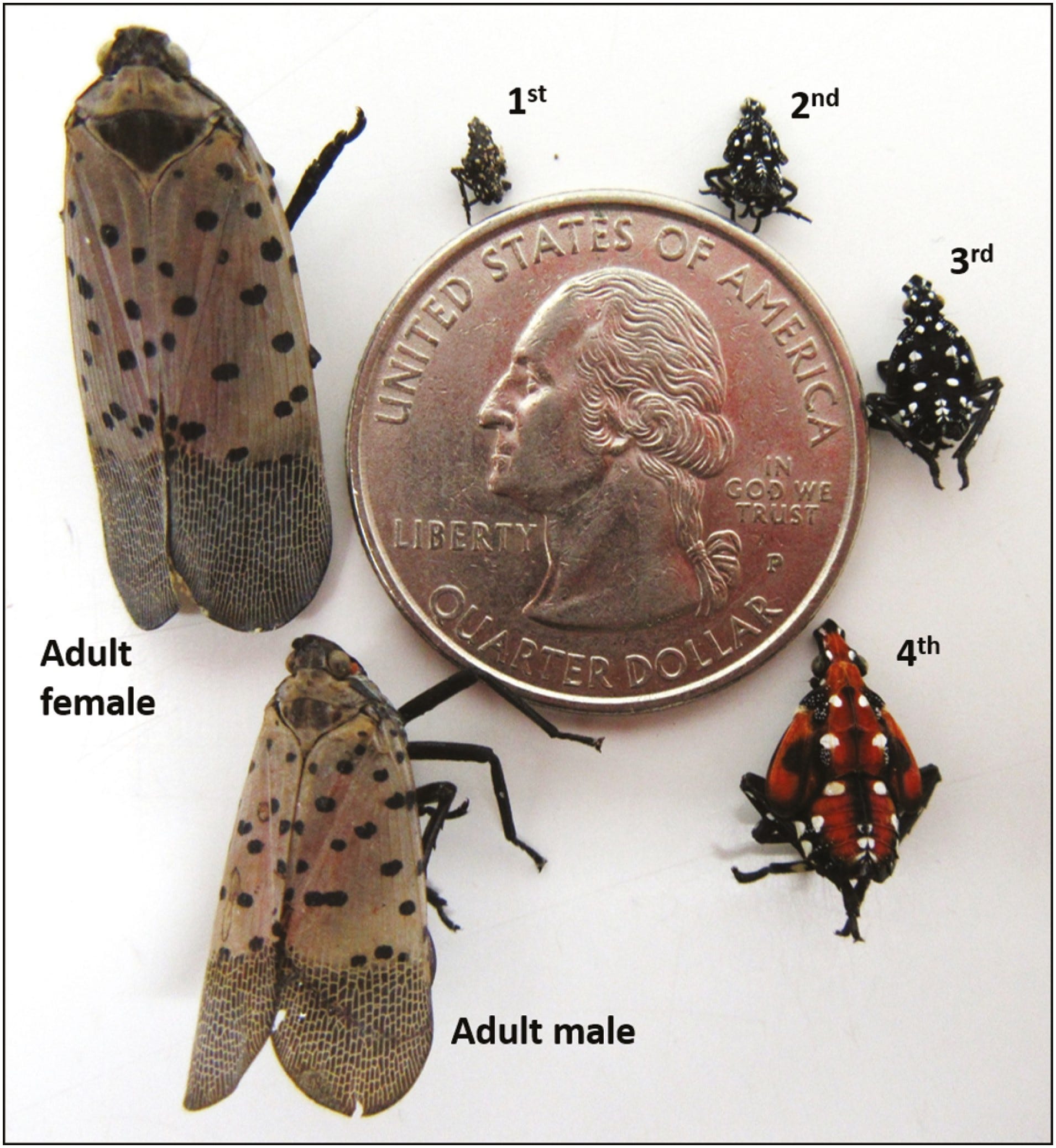
Spotted lanternflies come in a variety of forms depending on their life stage. As adults, they may be mistaken for large moths, and as nymphs, they look more like polka-dotted beetles. These insects are ruinous to plants, particularly those with agricultural value to us like peaches and grapes, so extra measures have been taken to cull their populations.
While I’m in no position to administer traps or pesticides in public parks (for the record, I’ve heard most DIY solutions with vinegar or dish soap are ineffective), common advice also includes manually squashing the bugs. The environmentalist in me is totally on board with invasives management, but the Buddhist within me faces a moral quandary.
Somewhat analogous to Christianity’s Ten Commandments, the Five Precepts form a kind of code of ethics for lay followers of Buddhism. They are, roughly paraphrased, as follows:
No killing
No stealing
No sexual misconduct
No lying
No intoxication
Going into each of the precepts could be a blog series in itself, and in this article, I’d like to focus on the first precept. Among most Buddhists, myself included, the first precept is the most important of the five. It’s so interconnected to other Buddhist concepts - nonviolence (ahimsa), respect for the cycles of rebirth (samsara) and the accumulation of positive karma, the Buddha-Nature in all creatures - that I think it’d be hard to consider yourself Buddhist without at least taking the first precept into consideration.
While killing of any kind is condemned, there is a spectrum. For example, killing large animals is considered worse than killing small animals because the act requires more effort and deliberateness. Since becoming vegetarian (which I did not start because of ethical reasons), I’ve taken a more serious approach to the first precept. Of course, I don’t eat meat anymore, which I’d say is karmically good, but I’ve also been more aware in other ways. For instance, I take care not to kill insects, even mosquitos biting me, because they, like us, are sentient beings.1
But I think the Buddhist stance on invasive species is more controversial. I’m reminded of the Buddhist practice of ‘life release’2, releasing captive animals to save their lives, which has spread invasive species despite good intentions. For instance, just a few years ago, some Chinese monks released non-native lobsters into the wild off the coast of England. While I think it’s unskillful in itself to release non-native species into a new habitat, this incident was particularly egregious because American lobsters are invasive to European waters. In addition to this lobster incident, red-eared sliders, turtles native to the US, have proliferated across Asia as a result of life release. I’ve heard that small pet industries have sprouted up specifically aimed at taking advantage of life release, arguably perpetuating the cycle of suffering.
A rationale I’ve heard for culling invasives is that it is better for the greater good, our environment, and the global biosphere. Buddhists even cite the Story of the Ship Captain.3 The summary of the story is that a ship captain, who happens to be a previous life of the Buddha, detects that a stowaway intends to kill the people on the ship and all of its crew. Realizing the only way to stop the would-be murderer is to kill him, the captain takes the life of the stowaway out of the greater benefit of the ship’s 500 other passengers.
I have trouble extrapolating the lesson of the story to daily life. Some iterations of this story mention that the ship captain had mind reading powers which is how he could accurately and assuredly know the intentions of the stowaway. Plus, he also had to have abilities to know there was nothing he could do to stop the stowaway except to kill him. Clearly, us normal people don’t have these abilities or even the discernment of a bodhisattva. As Buddhists who take the Middle Path, it’s important for us to see the grey in a black-and-white situation, to choose option C between A and B. I can’t imagine a situation in which killing in absolutely necessary, and I’m not sure if one exists.
To bring it back to the spotted lanternfly, while I think there should be more awareness for invasive species in general, it’s important to remember that the only reason the spotted lanternfly gets so much attention is that it threatens our agricultural productivity. I’m reminded of a famous Zen quote that is very relevant; it goes something like this:
Flowers fall, even though we love them; and weeds grow, even though we hate them.
-Dogen
Even with good intentions, it’s very hard to things to go the way we want them to. I’m still not sure what I should do as a Buddhist when I see a spotted lanternfly in the park. For now, I think I’ll leave them be, for even invasive species have a chance at enlightenment. But, regardless of your approach to invasives, I think there are a few principles we can all abide by: don’t be needlessly cruel, focus on your compassionate intentions of helping the environment, and don’t take pleasure in killing.
I think anything in kingdom Animalia is assuredly considered a sentient being in the Buddhist sense.
中文:放生 (fang sheng), བོད་ཡིག:ཚེ་ཐར་ (tshe thar)
From the Upāyakauśalya-sūtra